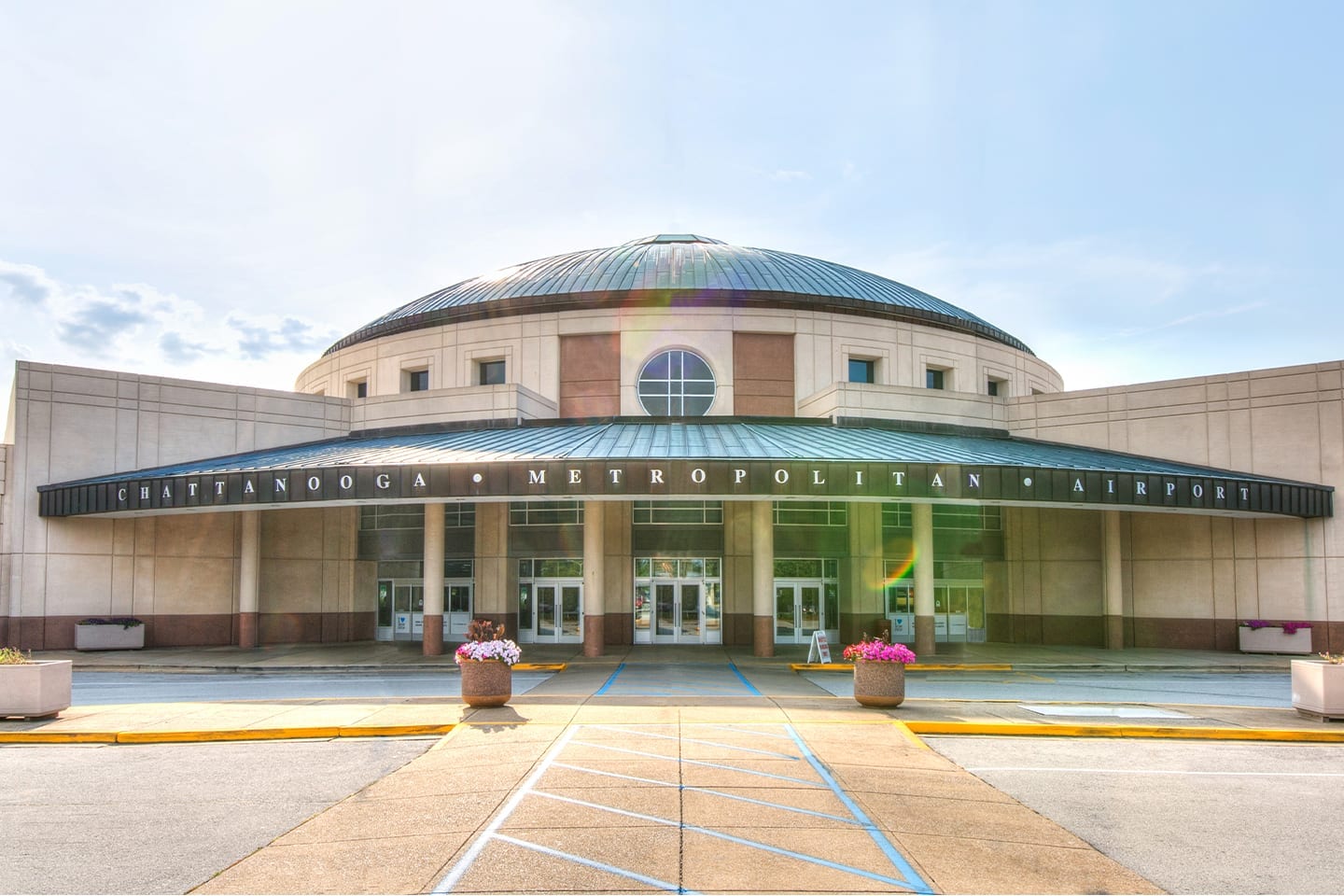

Chattanooga Metropolitan Airport
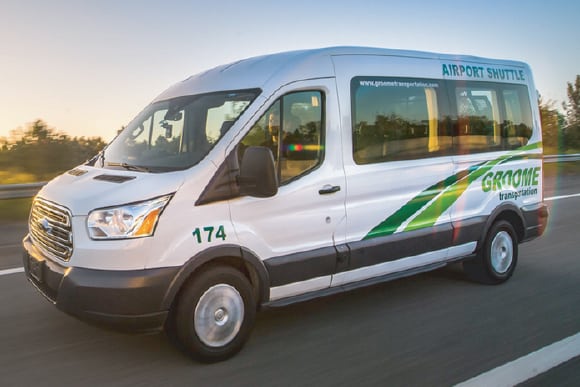
Groome Transportation
CARTA
The Scenic City’s prime location and natural features make traveling in and around the Chattanooga area convenient. From major interstate systems to thriving waterways, Chattanooga maintains a strong commitment to providing clean, efficient, and accessible transportation
options for all.
For as long as people have settled in the Tennessee Valley, river transportation has flourished along the Tennessee River and its tributaries. Chattanooga is home to the Chickamauga Lock – the second busiest in the nation for recreational boat traffic and a crucial connector in the inland waterway network. Today, commercial navigation of the waterways continues to save hundreds of millions of dollars in transportation costs by transporting around 50 million tons of goods every year, according to the Tennessee Valley Authority (TVA).
Similarly known as one of Chattanooga’s oldest transportation systems, the railways have a rich history of supporting the local economy. The first steam locomotive rolled into Chattanooga in 1849, allowing the river outpost town to become a major rail hub in the American South. The Western and Atlantic Railroad was later completed in 1850 and made way for the commercial rail transportation of today. Currently, several companies such as Norfolk Southern and CSX carry freight through the city each day.
Because of its optimal position at the convergence of I-75, I-59, and I-24, Chattanooga is also a part of “Freight Alley” and known as “the Silicon Valley of trucking.” Its proximity to major interstate systems make it an attractive base for trucking companies, including Covenant Logistics and U.S. Xpress. Third-party logistics companies also thrive here, with familiar names such as Kenco Logistics, Steam Logistics, and Trident Transport all starting in Chattanooga.
Chattanooga Metropolitan Airport (CHA) continues to see impressive growth while receiving recognition for its commitment to sustainability. Recently awarded for its improved comfort and efficiency, the airport’s most recent expansion provides travelers with two new gates, more efficient boarding and deplaning, as well as additional restrooms, concessions, and more. In addition to previously established nonstop flights to major hubs such as Charlotte, Dallas, and Atlanta, CHA now offers nonstop flights to Las Vegas and Punta Gorda, resuming nonstop service to New York City as well.
Bolstering Chattanooga’s transportation systems on the ground is the Chattanooga Area Regional Transportation Authority (CARTA). Operating one of the largest fleets of electrical buses in the country, CARTA runs 15 fixed bus routes and manages the free Downtown Electric Shuttle system. With the help of federal funds, CARTA announced the addition of three electric shuttles to its fleet – aiming to meet the growing transportation needs in downtown and Northshore, as well as along St. Elmo. Additional improvements are also underway to help improve CARTA’s mobility access and financial viability with the use of AI.
Another sustainable and cost-effective option is Bike Chattanooga. Offering 450 regular and electronic bikes across 43 stations in the city, locals and visitors alike can enjoy convenient rental access throughout the year. Soon, cyclists will enjoy an enhanced Cherokee Boulevard, featuring a buffered westbound bike lane from Market Street to the Stringer’s Ridge Tunnel and a lowered 35 mph speed limit for a safer, more scenic ride.
Electric vehicles also have an advantageous position in the Scenic City. Committed to increasing public access to sustainable transportation options, Chattanooga continues its collaboration with CARTA, TVA, and the State of Tennessee to install more electric vehicle charging stations along major routes. To encourage greater electric vehicle adoption, TDEC and TVA unveiled a plan in 2025 to strengthen DC fast-charging infrastructure, with stations positioned at least every 50 miles along prioritized travel corridors.
Bike Chattanooga gives city bikers convenient access to 450 regular and electronic bikes available across 43 stations in the city. Riders have the option of a daily pass for $10, three-day pass for $20, or annual pass for $50.
Hamilton County’s public transit system, the Chattanooga Area Regional Transporta-
tion Authority (CARTA), reliably transports roughly 3 million passengers each year. To make travel cleaner, quieter, and more convenient than ever, CARTA is rolling out new all-electric shuttles – thanks to $1.2 million in federal funding. In addition to the Downtown Electric Shuttle, CARTA operates the Care-a-Van service for the disabled and the Lookout Mountain Incline Railway.
Fly high with Chattanooga Metropolitan Airport (CHA)! Named the fastest-growing small hub airport in the U.S. for summer 2025 by Cirium Aviation Analytics, CHA saw a 32% boost in seat capacity for its third quarter. After a major terminal renovation, the airport also earned the 2025 SEC AAAE Architectural Project of the Year award, offering travelers improved comfort and efficiency. CHA features LEED-certified facilities, convenient parking, and nonstop flights via Delta, United, Allegiant, and American Airlines.
Across from the Chattanooga Metropolitan Airport is the fixed base operator (FBO) Wilson Air Center, which provides highly-rated services to private air travelers. Professional Pilot magazine named Wilson Air Center the most improved FBO in the country in recent years.
Electric vehicle operators have access to 300+ public charging stations in the Chattanooga region, including areas such as Lookout Mountain, Hixson, East Brainerd, and Ooltewah. Out of the stations in the area, 42 are free, and 61 are fast-charging stations.
Groome Transportation is a convenient option for an airport-to-city shuttle. Located in East Ridge, Groome operates daily trips between Chattanooga and nearby Nashville International Airport and Atlanta’s Hartsfield-Jackson Airport.
All interstates lead to the Scenic City, or so it seems. Chattanooga’s sweet spot along I-24, I-59, and I-75 connects it to nearby major cities in the Southeast, including Nashville, Knoxville, Atlanta, and Birmingham.
Some of the nation’s top logistics providers gravitate to the convenient location and thriving entrepreneurial spirit of the Scenic City. Chattanooga is host to the annual Future of Freight Festival, which unites leaders and experts to forecast market trends in the industry. Several local businesses have been featured on the 2025 Inc. 5000 list of “Fastest Growing Companies in America,” including Bullins, MOCA Logistics, LogistiX, KCH Transportation, Steam Logistics, and Kenco Group.
Two major railway companies connect Chattanooga to the rest of the country and support supply chains. Norfolk Southern’s Crescent Corridor spans 2,500 miles from New Jersey to Louisiana, and CSX railways cover more than 1,500 miles of track throughout the state of Tennessee.
Sometimes called “Freight City,” Chattanooga is popular among trucking companies for its strategic location in the Southeast. U.S. Xpress, Covenant Logistics, Shah Trucking & Logistics, and Tranco Logistics call the Scenic City home, providing long-distance trucking and the distribution of raw materials and finished goods to manufacturers.
Connected to a wealth of inland rivers, the Tennessee River has an essential role in transporting raw and finished goods throughout the Southeast. Several terminals operate along the river, with companies like Serodino, Inc. transporting more than 2 million tons of cargo annually. Chattanooga is also home to the Chickamauga Lock – the second busiest in the nation for recreational boat traffic and a crucial connector in the inland waterway network. To optimize water transportation and reduce transit time by 80%, the U.S. Army Corps of Engineers is replacing the Chickamauga Lock with a new 110-by-600-foot structure that will allow for nine barges at a time.
*Chatt Choices™